
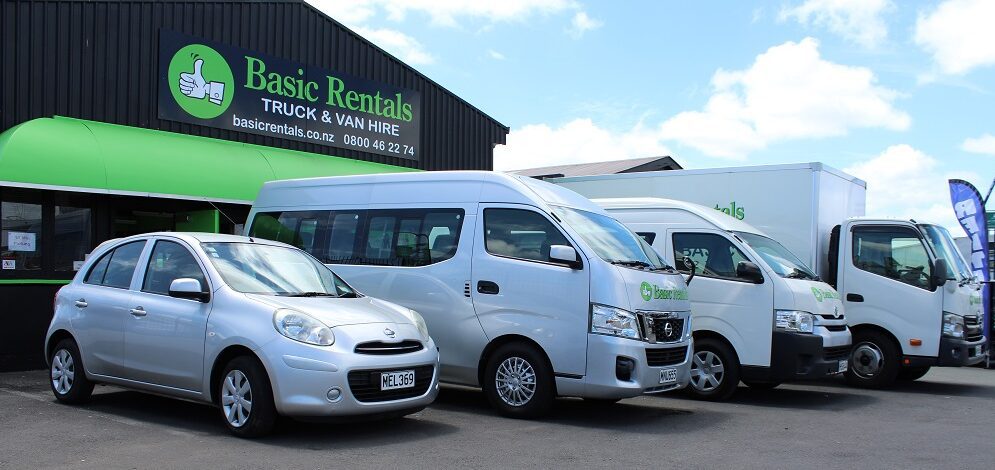
Buying a vehicle outright, committing to a long-term hire, or hiring by the day are the three main ways an Auckland business can cover a vehicle need, and each comes with a different balance of cost, control and flexibility. There is no single right answer; it depends on how certain the work ahead looks, how much capital makes sense to tie up, and how quickly things might need to change. This guide walks through what each option actually involves, what it tends to cost, and the kind of situation each one tends to suit, so the choice can be made with the full picture and how Basic Rentals can help you.
Here’s what this guide covers:
- Fleet Hire, Lease or Buy for Your Business
- When to Consider Fleet Hire for Your Business
- What Business Vehicle Hire and Buying Can Actually Cost
- How Basic Rentals Supports Auckland Businesses
- Frequently Asked Questions
Fleet Hire, Lease or Buy for Your Business
Deciding between buying, long-term hire and day-by-day hire often comes down to three questions, how much certainty there is around future need, how much capital is available to commit upfront, and how important flexibility is if plans change. None of these questions has a universal answer, and different businesses can reasonably land on different options depending on what matters most to them at the time.
Ownership offers the most control over a vehicle, since it belongs to the business outright once it is paid for. That control comes together with the capital outlay of the purchase itself, along with the ongoing costs of maintenance, servicing and depreciation, all of which sit with the owner rather than a hire company. Long-term or monthly hire shifts many of these responsibilities onto the hire provider in exchange for a fixed, predictable monthly cost, which can make it easier to scale a fleet up or down as work changes without the delay or capital commitment of buying additional vehicles. Day-by-day hire goes a step further again, with a cost that only applies on the days a vehicle is actually needed and no ongoing commitment once the work is finished.
| Option | Commitment | Who it suits |
| Buy | Full ownership, capital, maintenance and depreciation sit with you | Businesses with steady, long-term vehicle needs and the capital to invest upfront |
| Long-term hire | Fixed monthly cost, no ownership or maintenance burden | Businesses wanting predictable costs and the ability to scale up or down |
| Day-by-day hire | Pay only for the days used, no long-term commitment | Businesses covering short jobs, seasonal spikes or one-off contracts |
None of this needs to be worked out from a table alone. If it would help to talk through what fits a specific situation, one of our experienced team is on hand; simply reach out any time. For a business leaning towards buying but wanting to spread the cost, Basic Rentals also offers lease-to-own truck options through the Vehicle Sales page, sitting somewhere between hiring and owning outright. This might suit a business that wants to work towards full ownership without committing the entire purchase price on day one.
When to Consider Fleet Hire for Your Business
There are a few situations in which fleet hire is often worth a closer look.
- A new contract or seasonal spike with a clear end date, where buying a vehicle outright would leave it sitting idle once the work finishes
- An ageing company vehicle that needs replacing, or a reliable backup while it is off the road
- Expansion into a new service area or delivery route that has not yet proven its long-term vehicle needs
- Wanting to test demand for extra capacity before committing capital to owning more vehicles
None of these situations require an immediate decision; they are worth weighing against the numbers before choosing an option.
What Business Vehicle Hire and Buying Can Actually Cost
The sticker price of a vehicle and the daily or monthly rate of a hire agreement are only part of the overall cost picture. A purchase also carries costs that do not show up until later, such as servicing, unexpected repairs, insurance, and the vehicle’s value declining over time through depreciation. A hire agreement generally has these costs built into the rate from the outset, which is part of why a higher daily figure does not automatically mean a higher total cost once everything is accounted for. Working through the categories below against real figures for a specific vehicle and a specific hire quote tends to give a more reliable comparison than relying on the headline number alone. Inland Revenue also publishes guidance on vehicle expenses, which sets out how the tax treatment differs depending on whether a vehicle is owned or hired.
- Purchase price versus monthly hire rate, the upfront capital a purchase requires compared with a predictable ongoing cost
- Maintenance and servicing, an ongoing responsibility with ownership versus a cost typically built into a hire arrangement
- Insurance and depreciation, both of which sit with the owner of the vehicle rather than the hirer, worth checking against Inland Revenue’s rules on claiming depreciation
- Downtime risk, the cost to the business if a vehicle is off the road and no backup is available
How Basic Rentals Supports Auckland Businesses
Basic Rentals built its Business Solutions plans around exactly this kind of decision. Day-by-day hire is there for the short-term jobs and unexpected gaps that come up without much warning, while the monthly plan gives a fixed, predictable cost for as long as a longer piece of work requires it, with nothing owed once that work wraps up. A single vehicle can be arranged for a delivery route or a one-off job, and the same plans scale up to a small fleet as a business grows, without tying up cash flow in vehicles sitting on the books between jobs. Vehicles are maintained as part of the arrangement, so a service or an unexpected mechanical issue does not become an added cost or an added job for the business to manage. Common questions on insurance, excess and terms for business hires are answered on the FAQs page, and the team is on hand for anything specific to a particular fleet or job.
A custom quote for a business’s specific vehicle needs is available through our Business Solutions page, a straightforward way to see what a plan built around the business would actually look like, without tying up capital in vehicles that might only be needed for a season.
Frequently Asked Questions
Is It Cheaper to Hire or Buy a Business Vehicle?
There is no single answer, since it depends on how long you need the vehicle and how your business plans to use it. Buying suits businesses with steady, long-term needs and the capital to invest upfront, while hiring is generally more cost-effective for shorter or less certain vehicle needs, since it avoids the capital outlay, maintenance, and depreciation that come with ownership.
How Long Can I Hire a Van for My Business?
Basic Rentals offers both day-by-day and monthly hire, so the length of hire can match the length of the job. A monthly plan works well for an extended project or a longer-term gap in your fleet, while day-by-day hire covers a single delivery run or a short-term need with no long-term commitment.
Can I Scale My Rental Fleet up or Down?
Yes, rental fleets can scale up or down as your business changes, without the delay or capital commitment of buying additional vehicles outright. This makes hire a practical way to test demand in a new service area or cover a seasonal spike before deciding whether a permanent purchase makes sense.